

A journey through the river landscapes, temple heritage, traditional crafts and coastal scenery of Andhra Pradesh
Day 1 — Hyderabad to Vijayawada
Across the Countryside to the Krishna
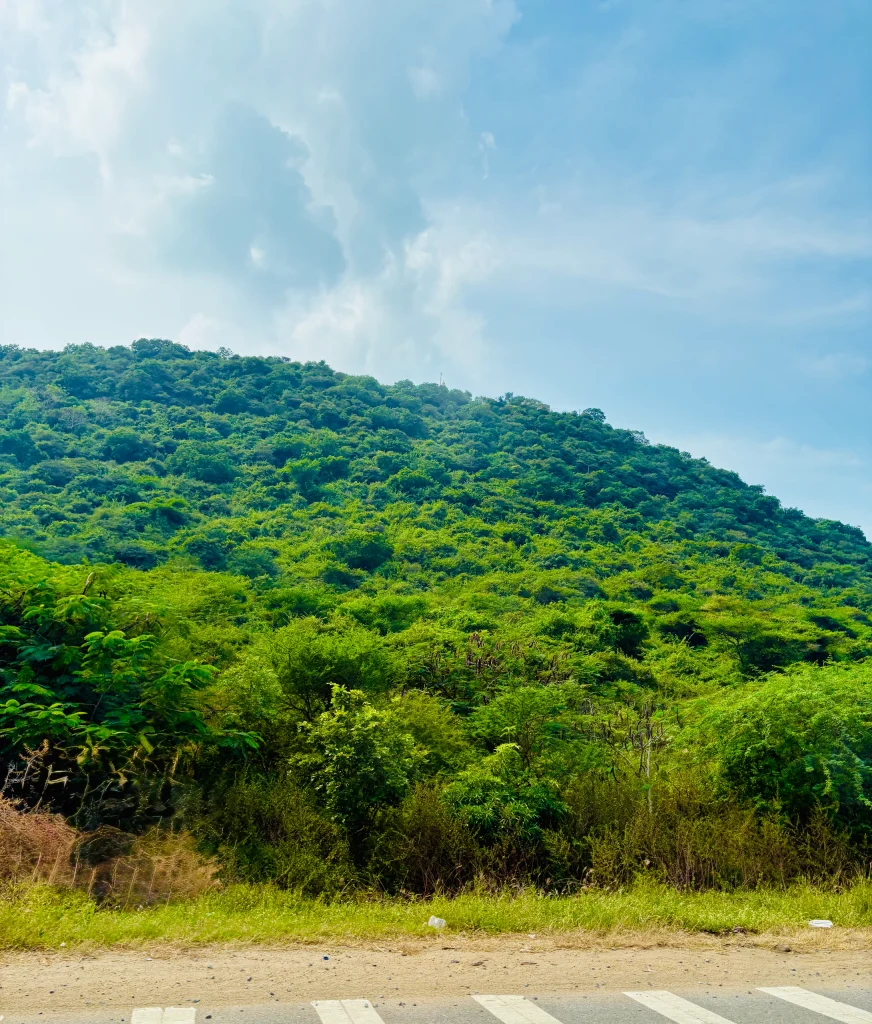
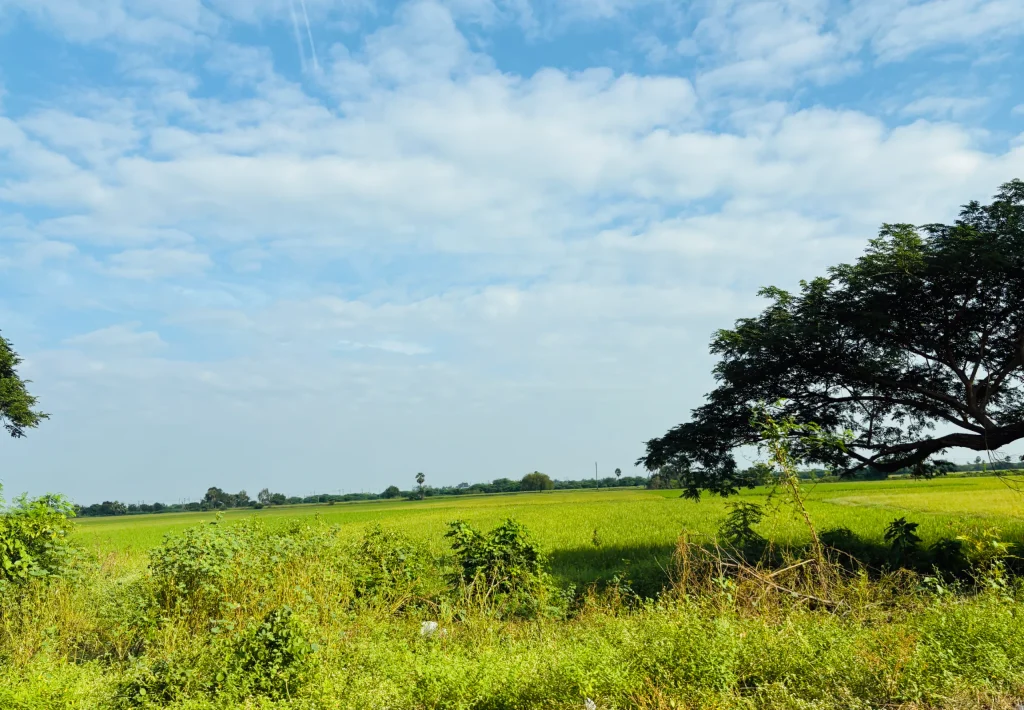
In late November, we set out from Hyderabad along NH 65 towards Vijayawada, passing stretches of countryside, rocky hillocks and fields of yellow wildflowers. The cotton fields added another dimension to the journey, offering glimpses of the rural landscape and the agricultural life that shapes this part of Andhra Pradesh.
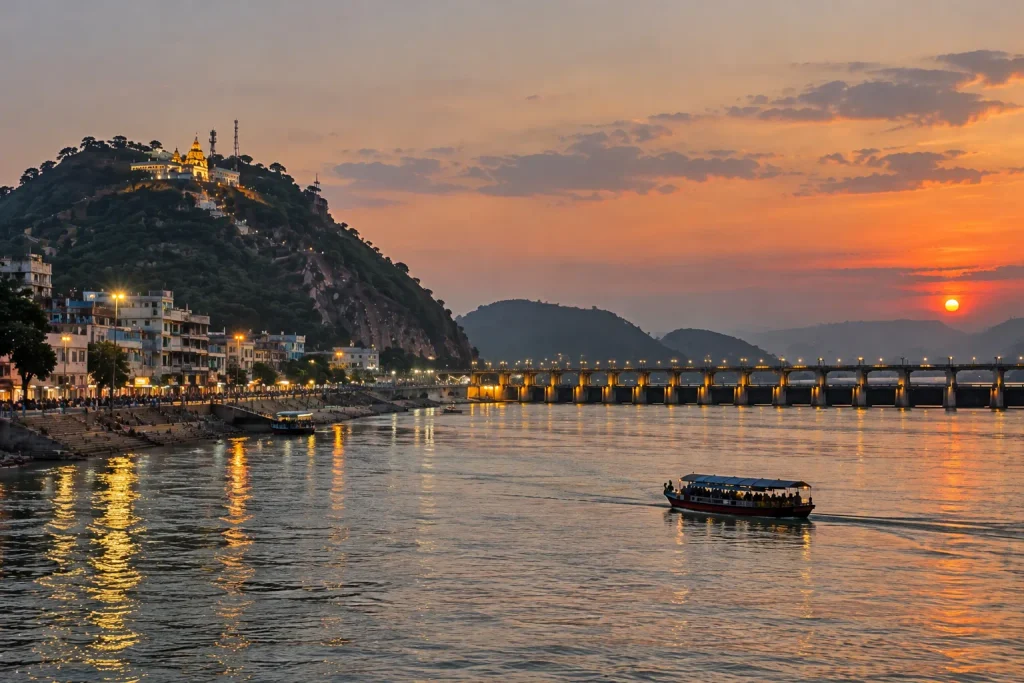
As Vijayawada drew closer, the Krishna River became a defining presence. The Prakasam Barrage extended across the broad waterway, while Indrakeeladri Hill, crowned by Sri Kanaka Durga Temple, rose above the city. Together, they formed a striking introduction to Vijayawada, where the river and the temple remain central to the city’s identity.
Our first visit was to Sri Kanaka Durga Temple. Its elevated setting brought the surrounding landscape into view, bringing the city and the river into a single frame .
As evening approached, a warm golden light settled over Vijayawada, illuminating the broad waters of the Krishna River and casting a gentle glow across the Prakasam Barrage. Above the river, Kanaka Durga Temple stood on Indrakeeladri Hill, its silhouette becoming more striking against the evening sky. The interplay of golden light, flowing water and the temple rising above the city made for a memorable impression of Vijayawada.
Day 2 — Temples and Traditional Craft
Craft, devotion and rock-cut architecture
Kondapalli
A short drive from Vijayawada brought us to Kondapalli, where brightly painted wooden toys have been part of local life for generations. The workshops reveal the stages behind the finished figures, from carving and shaping the wood to painting each piece in colour.
The contrast between the painted toys and the unpainted wooden forms was especially striking. Each had a different character, from the detailed, colourful figures on display to the simpler shapes awaiting their finish.
Amaravati and Undavalli
The fertile plains along the Krishna River have shaped Amaravati’s identity for centuries, sustaining agriculture and nurturing an ancient Buddhist heritage. Today, Amaravati is also the capital of Andhra Pradesh, linking the region’s rich past with its emerging future.
At Amaravati, our visit to Sri Amaralingeswara Swamy Temple brought us into the quiet rhythm of a historic pilgrimage town beside the Krishna River.
Beyond the temple, Amaravati’s Buddhist heritage offers another glimpse into its past. The ancient stupa and the celebrated sculptures associated with the Amaravati school of art speak of a time when this region was an important centre of Buddhist art and devotion.
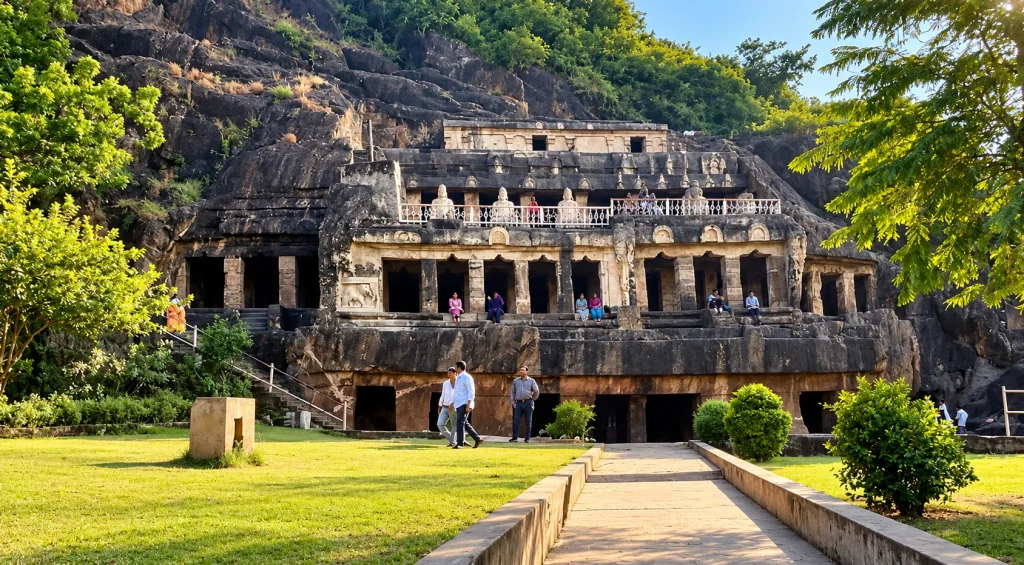
From Amaravati, we made our way to Undavalli, where the landscape gives way to a sandstone hillside carved with an extraordinary complex of caves.
The rock-cut façades, shadowed interiors and sculpted pillars reveal themselves gradually as we move through the site.
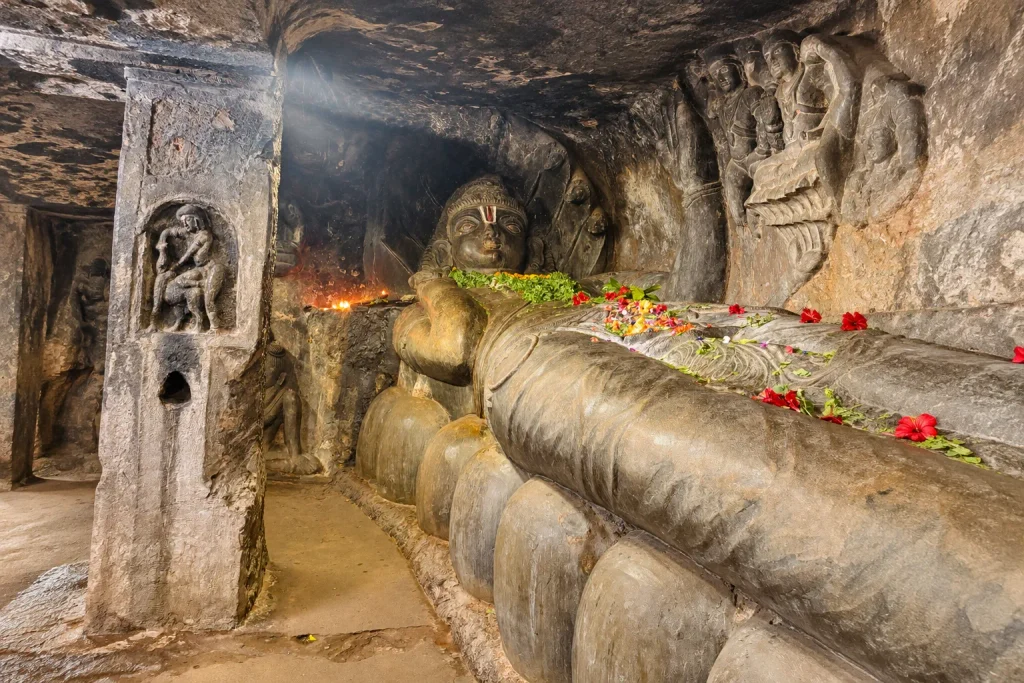
Inside, the monumental reclining figure of Lord Vishnu draws the eye, its form carved into the rock and illuminated by the subdued light of the cave.
The day brought together different expressions of the region’s heritage—from Amaravati’s Buddhist legacy to the remarkable craftsmanship of Undavalli’s caves—each offering its own way of connecting with the past.

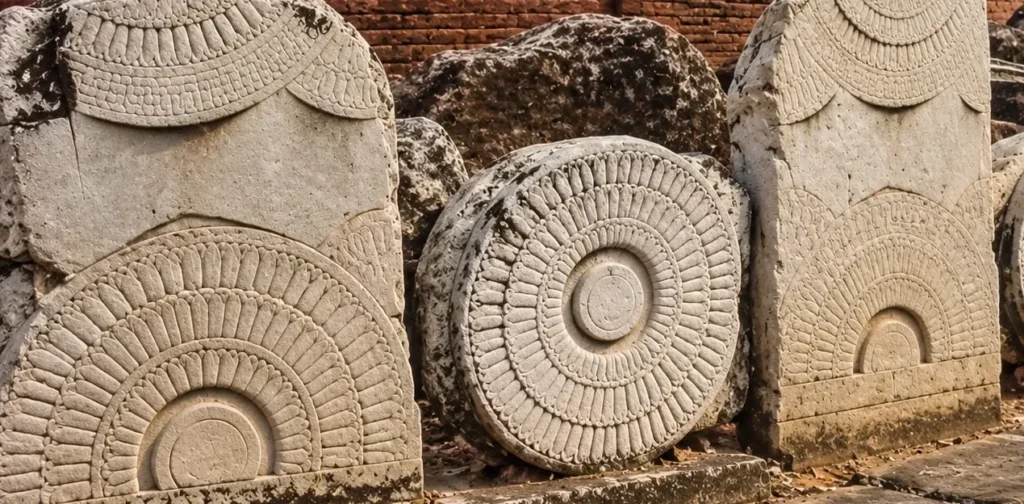
Carved stone remains of Amaravati’s ancient Buddhist heritage
Day 3 — Wetland and Sea
Uppalapadu Bird Sanctuary and Suryalanka Beach
Our final day brought two contrasting landscapes into a single outing: a bird-rich wetland inland and the broad shoreline of the Bay of Bengal.
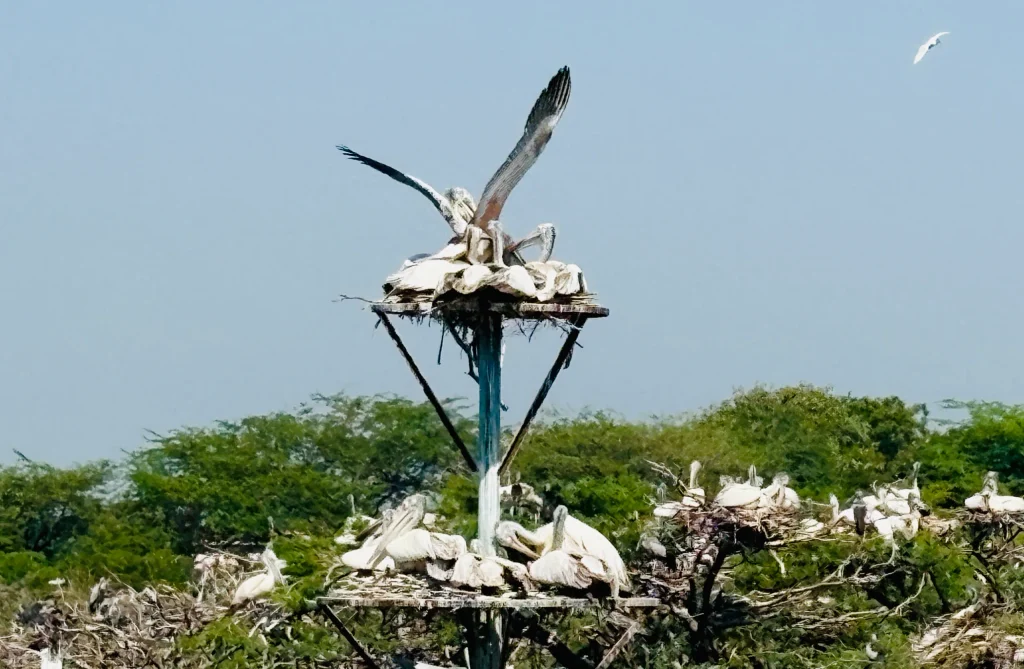
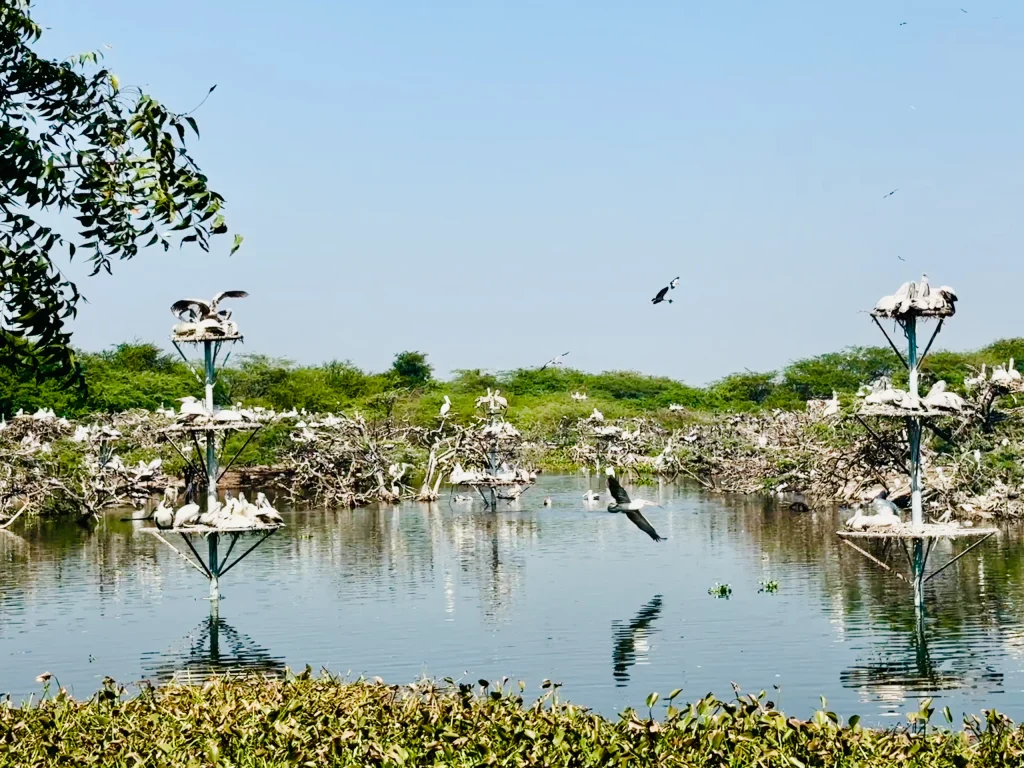
At Uppalapadu Bird Sanctuary, waterbirds gathered across the wetland, bringing movement and life to the stillness of the surroundings. The presence of birds, the movement of wings and the surrounding greenery offered a quieter kind of travel experience, one that invited observation rather than hurried sightseeing.
Wetlands are important ecological spaces, providing feeding and nesting grounds for numerous birds. Visiting Uppalapadu brought attention to this natural side of Andhra Pradesh, beyond its better-known temples and historic monuments.
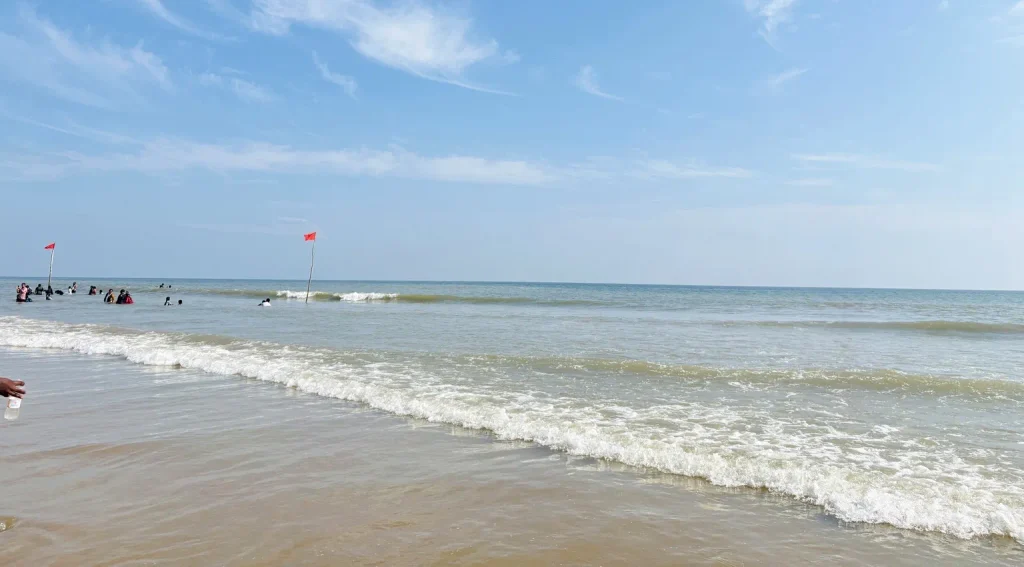
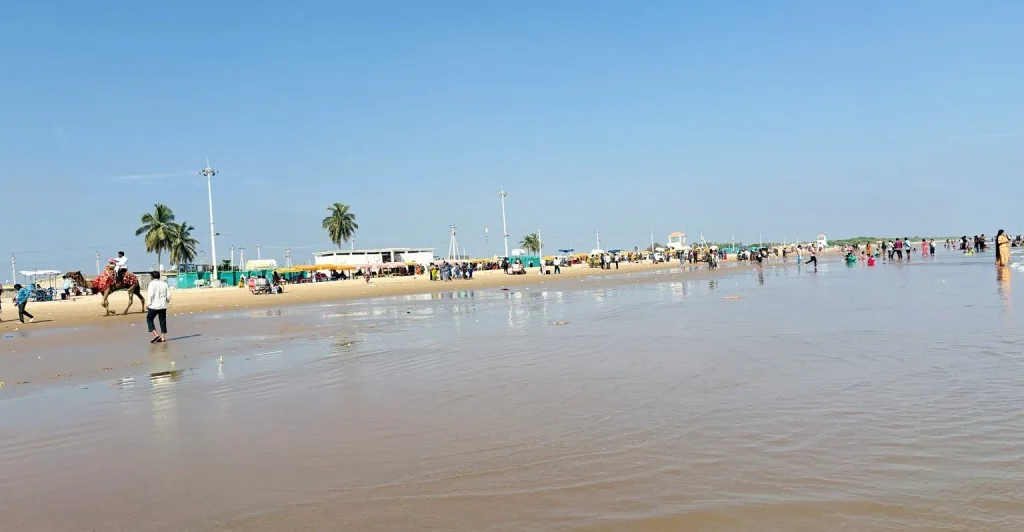
From Uppalapadu, we continued towards Suryalanka Beach near Bapatla. Along the way, palm trees punctuated the countryside, lending the road a distinctly coastal character. Gradually, the landscape opened towards the Bay of Bengal, where the sea stretched to the horizon. After day of temples, historic sites and journeys through the interior, the coast brought a quieter close to our explorations, with the expanse of water and sky taking centre stage.
The beach was a fitting final stop: a landscape defined by movement, light and the sound of the waves. After the varied experiences of the preceding days, the coast offered room to slow down and simply take in the view.
Our visits to Uppalapadu and Suryalanka brought the day to a close, taking us from the bird-filled wetlands to the broad sweep of the Bay of Bengal. We spent the evening by the coast and set out for Hyderabad the next morning.
Between Heritage and Horizon
From the sanctity of ancient temples to the ingenuity of traditional artisans, from cotton fields across the countryside to the vibrant world of handloom fabrics and sarees, this journey revealed the many facets of Andhra Pradesh. Each destination had its own character, shaped by faith, history, craftsmanship or the natural landscape.
What stayed with us was the contrast between these experiences — the enduring traditions preserved within temple walls, the human skill embodied in Kondapalli’s wooden toys, and the sense of openness that came with the wetlands and the sea. Together, they offered a journey through a region whose cultural depth and natural beauty are best appreciated not in isolation, but in the connections between its places and people.
Four days, several landscapes, and a collection of moments that remain connected by the road that took us there.