

The Green Corner
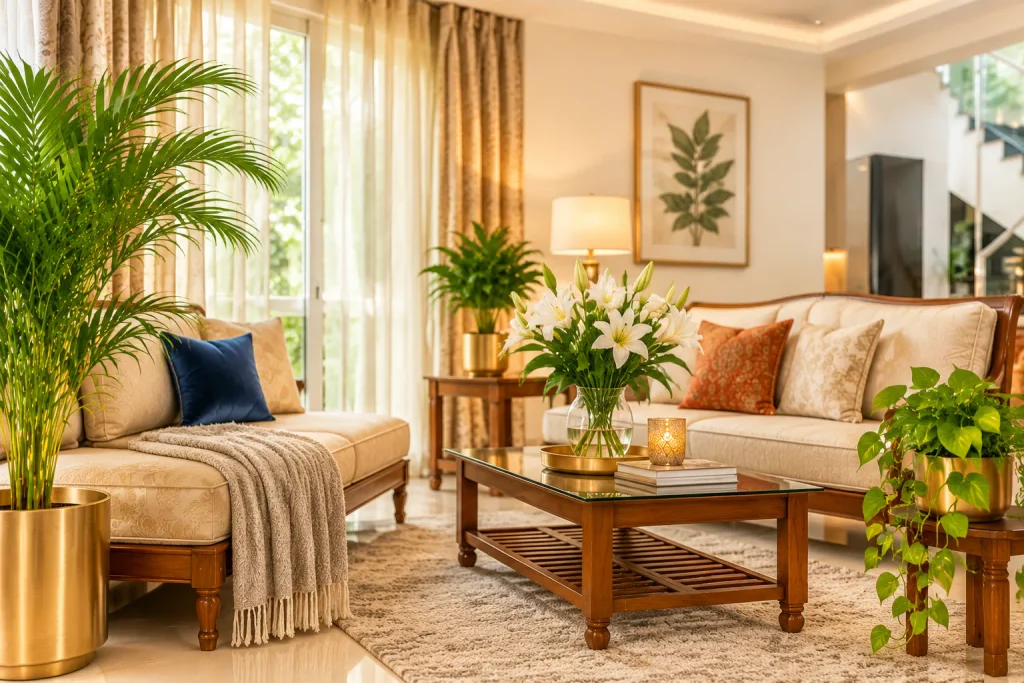
Indoor plants brings colour, texture and a connection to the natural world into everyday rooms. The arching fronds of a palm, the patterned leaves of a trailing vine and the sculptural outline of a broad-leaved plant each lend a different character to an interior.
Across Indian homes, plants have long occupied windowsills, verandas and corners close to natural light. They now appear just as naturally in contemporary apartments and thoughtfully designed interiors, where foliage offers a contrast to wood, stone, glass and fabric.
The appeal lies in this variety. Leaves may be glossy or matte, finely divided or broad, uniformly green or marked with contrasting shades. Some plants climb or trail; others grow in upright clusters. Each has its own form, shaped by its species, growing conditions and stage of development.
LEAVES WITH CHARACTER
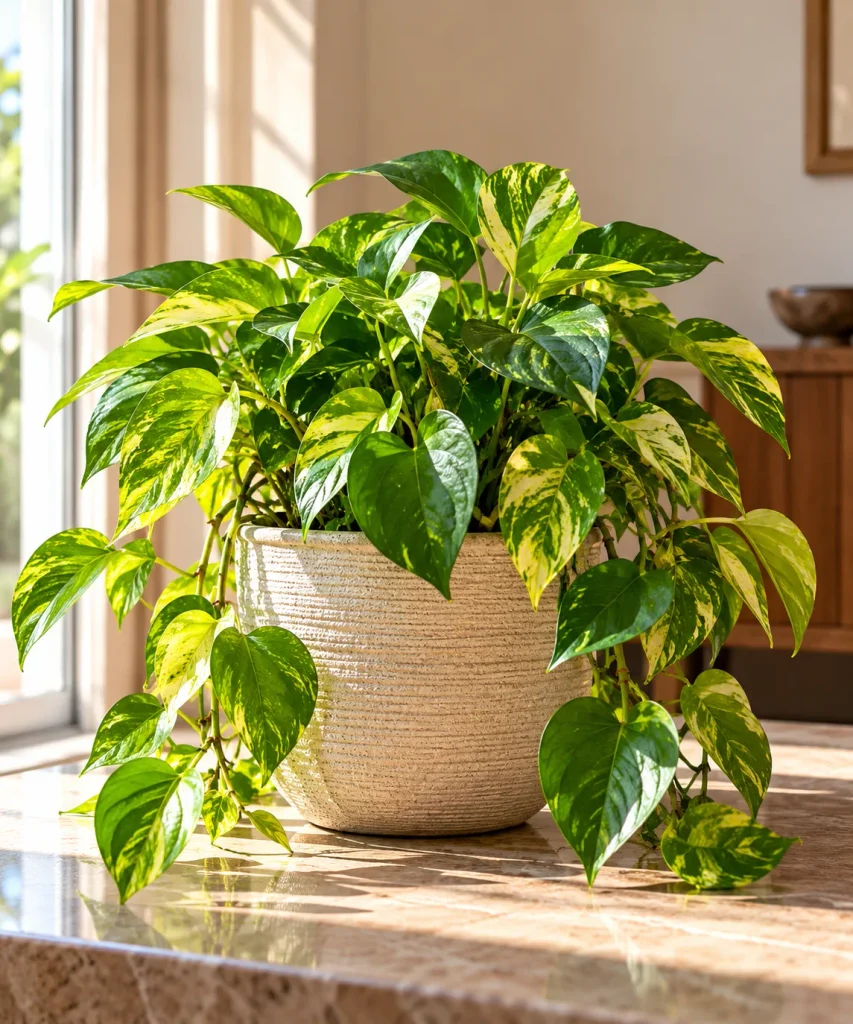
Money Plant | Epipremnum aureum
Often called golden pothos or devil’s ivy, this tropical climbing plant is known for its heart-shaped leaves and flexible stems. Depending on the cultivar, the foliage may be green, golden-yellow or variegated with cream. Its stems can trail from a pot or climb a support.
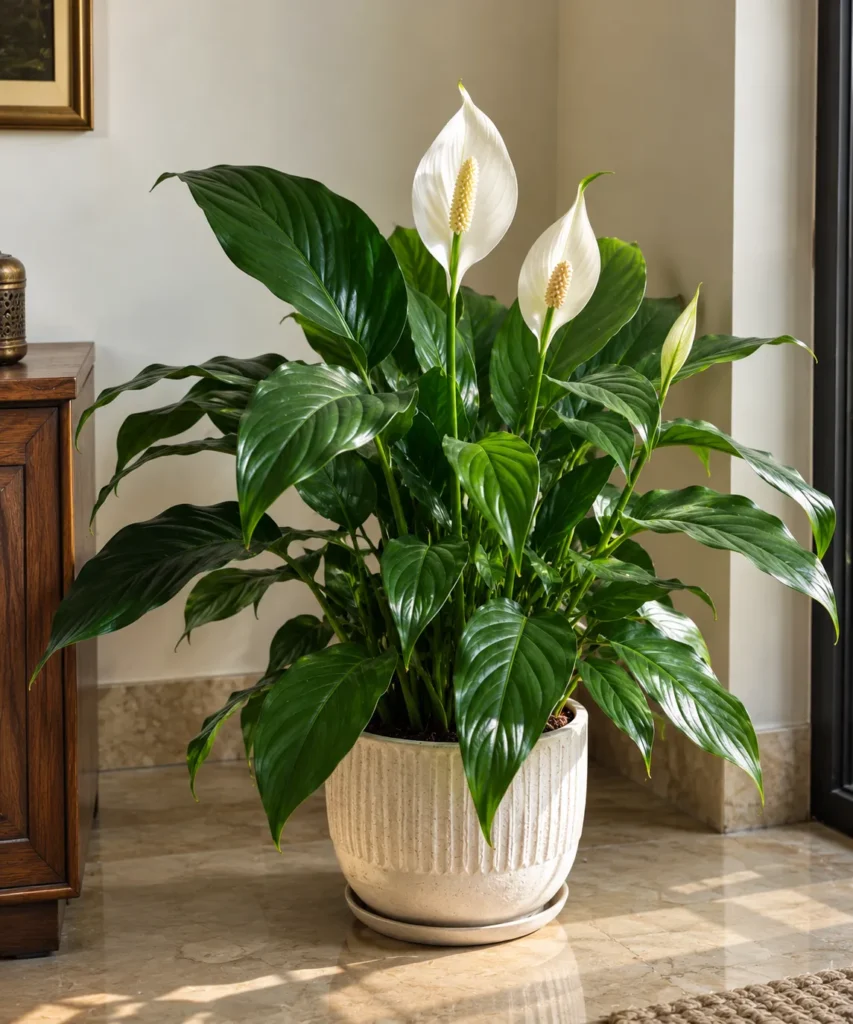
Peace Lily | Spathiphyllum species and cultivars
The peace lily has broad, deep-green leaves and a distinctive pale structure often mistaken for a flower. The white, leaf-like part is a spathe, which surrounds a slender flower-bearing spike called a spadix.
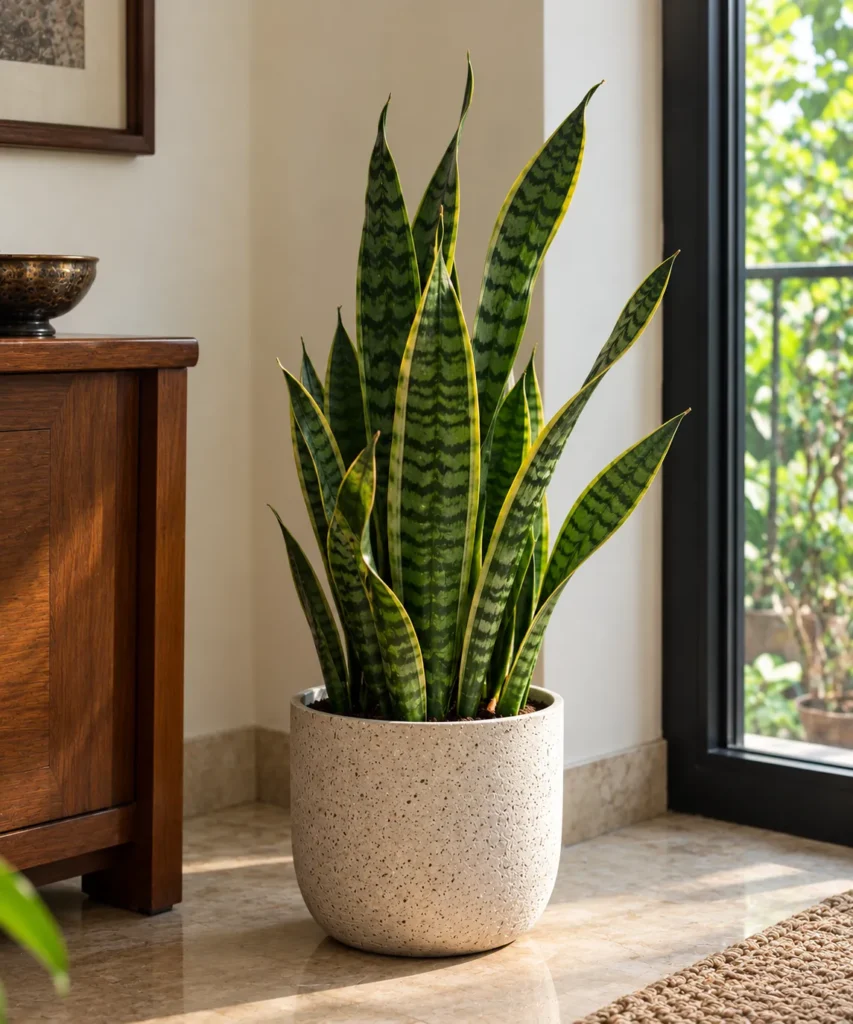
Snake Plant | Dracaena trifasciata
Previously known as Sansevieria trifasciata, the snake plant has upright, sword-shaped leaves, often patterned with green bands or yellow margins. Its thick leaves and water-storing tissues make it less tolerant of persistently wet growing medium than of brief dry periods.
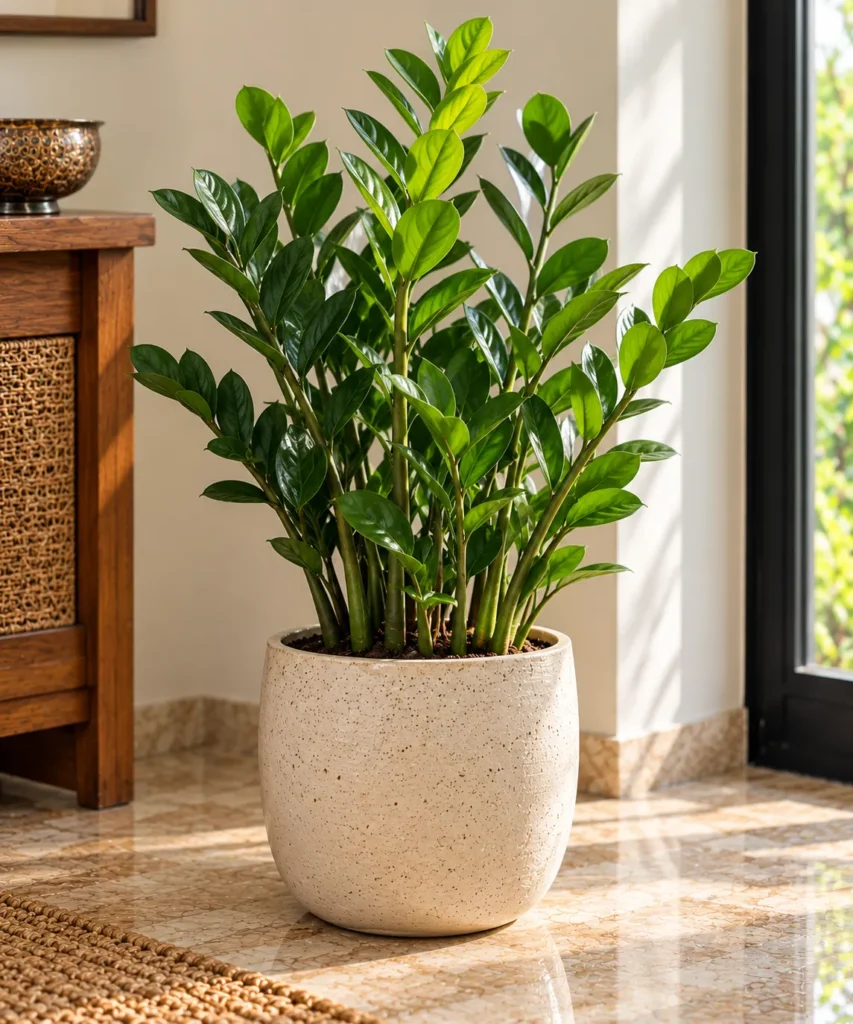
ZZ Plant | Zamioculcas zamiifolia
The ZZ plant carries rows of smooth, glossy leaflets along thick, upright or arching leaf stalks. Its underground rhizomes store water, helping it withstand periods between watering. It generally performs best in bright, indirect light but can tolerate lower-light interiors.
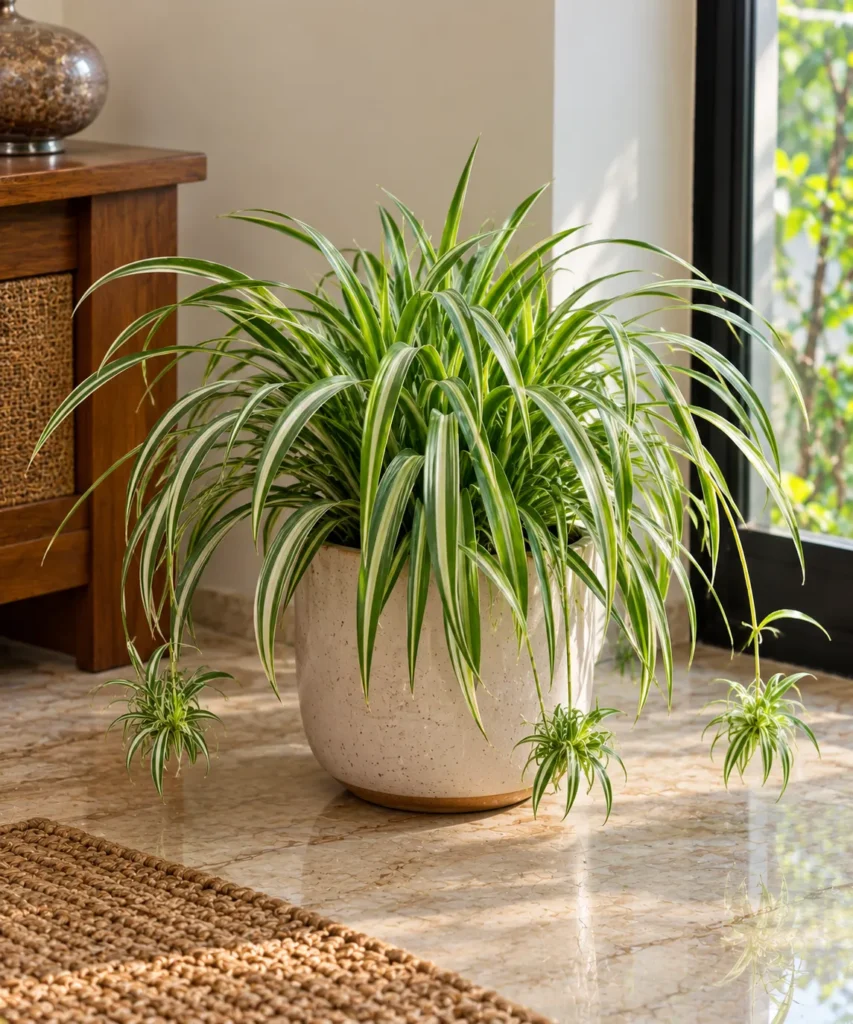
Spider Plant | Chlorophytum comosum
Narrow, arching leaves form a fountain of foliage. Many cultivated varieties have green leaves with white or cream stripes. Mature plants may produce long, slender stems bearing small plantlets, giving the plant its familiar cascading appearance.
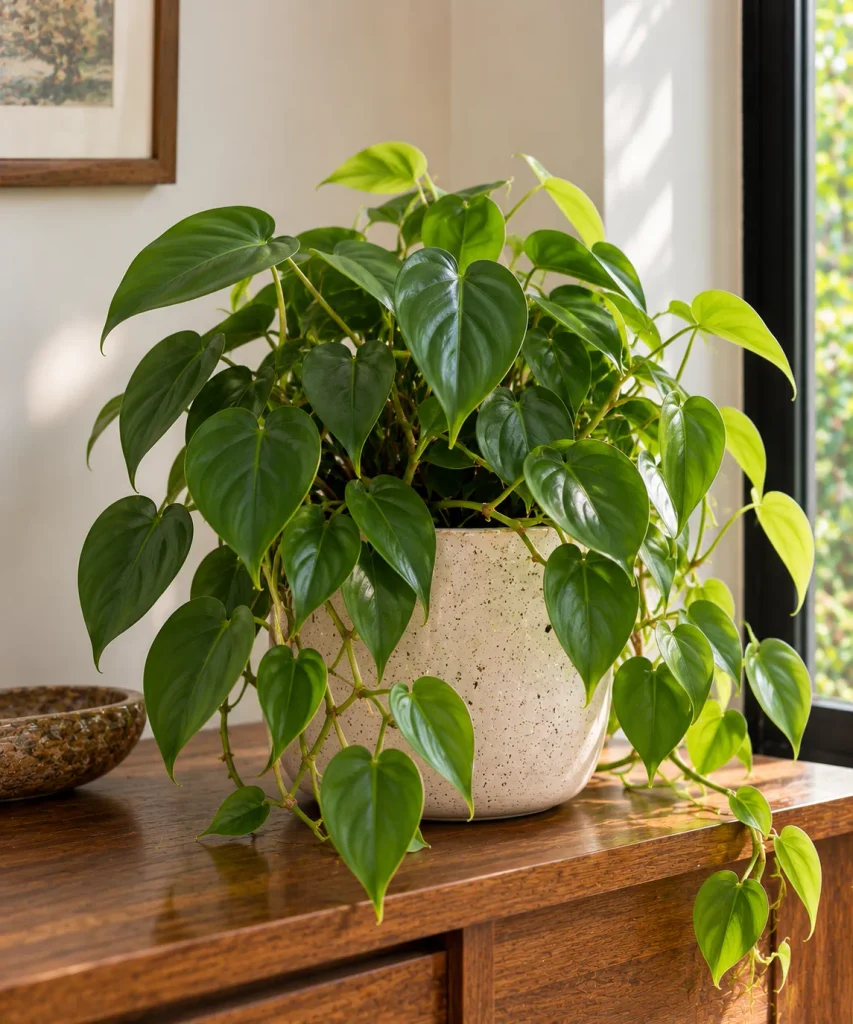
Philodendrons | Philodendron species
Philodendrons encompass a varied group of tropical plants. Some have small, heart-shaped leaves and trailing stems; others develop larger leaves and an upright or climbing habit. Leaf shape, mature size and growth pattern differ considerably between species and cultivars, so the name describes a group rather than one uniform plant.
MORE VARIETIES TO EXPLORE
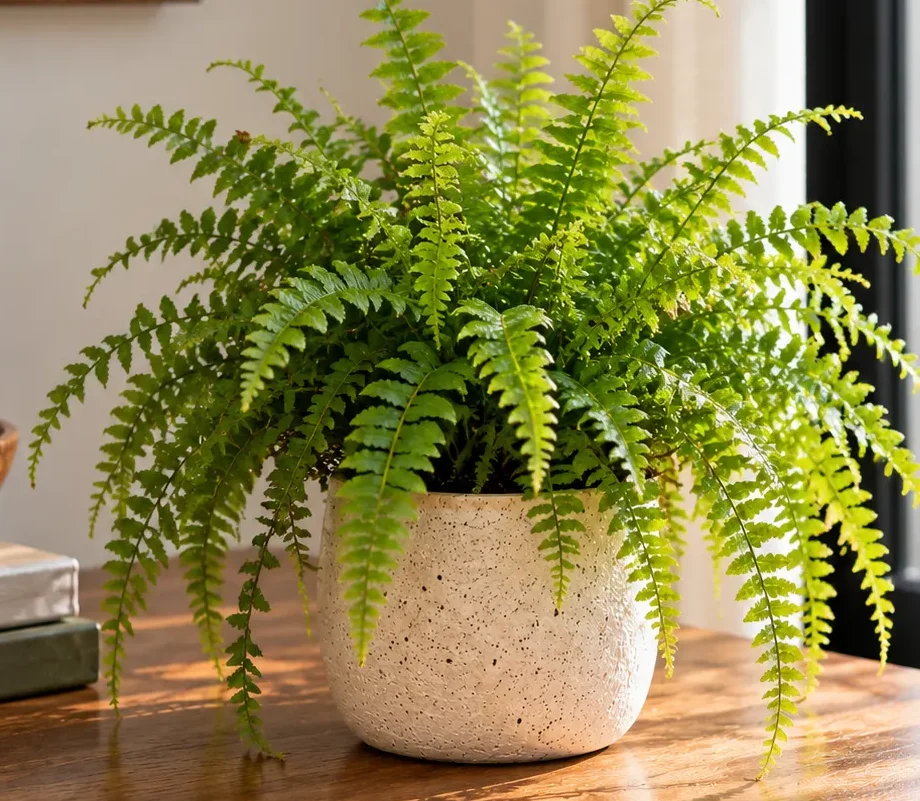
Boston Fern | Nephrolepis exaltata
The Boston fern is recognised by its long, arching fronds divided into many small leaflets. It creates a soft, feathery outline, contrasting with the solid leaves of many popular houseplants. It generally favours a consistently lightly moist growing medium and higher humidity; hot, dry air can cause the frond tips to brown.
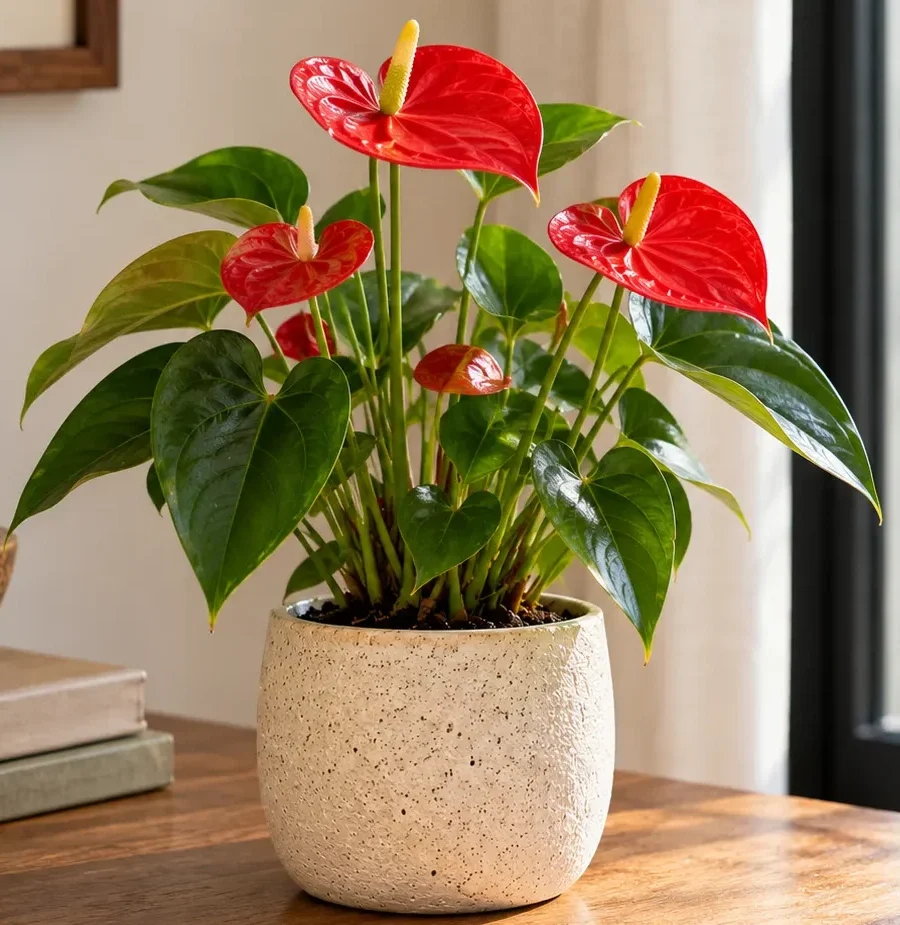
Anthurium | Anthurium species and hybrids
Many familiar ornamental anthuriums have glossy, heart-shaped leaves and striking red, pink, white or other coloured spathes surrounding a spadix. The colourful spathe is not itself the flower; the small flowers are borne on the spadix. Flower shape, leaf form and colour vary across species and cultivated hybrids.
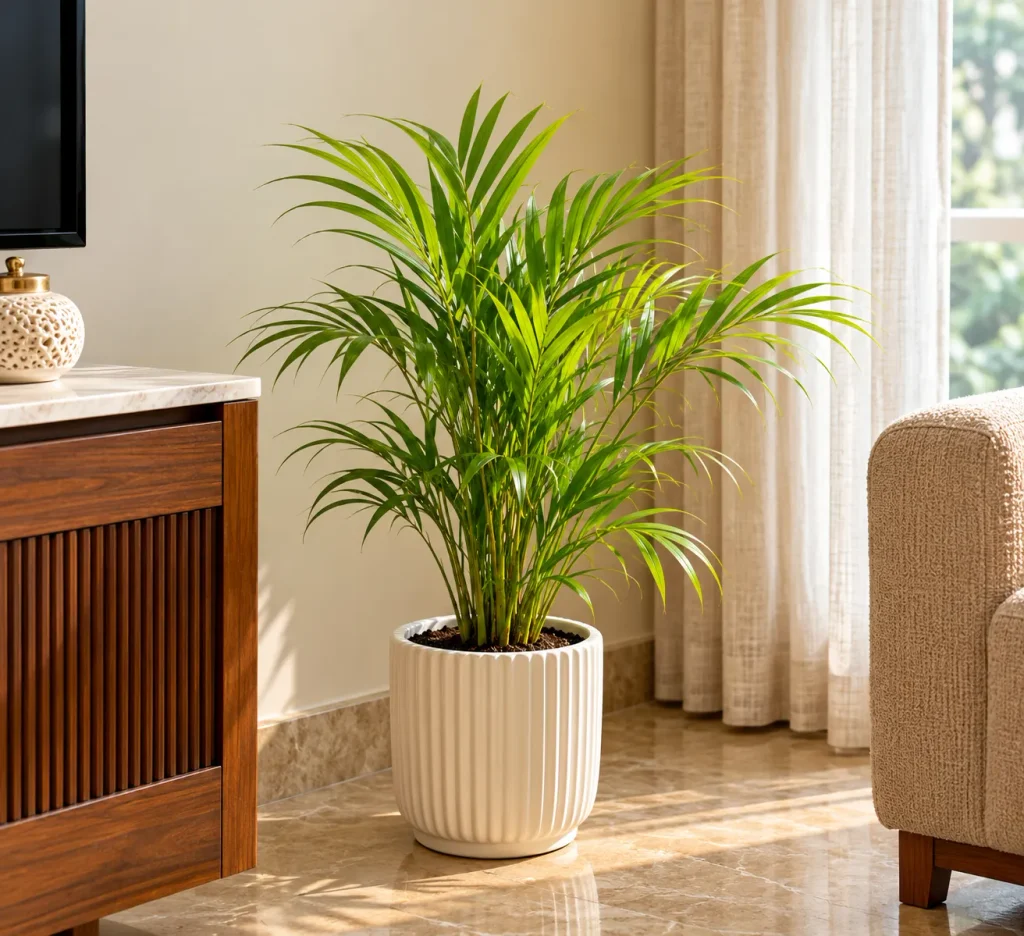
Areca Palm | Chrysalidocarpus lutescens (syn. Dypsis lutescens)
The areca palm grows as a cluster of slender, cane-like stems topped with arching, feather-shaped fronds. Its layered foliage creates a light, open silhouette, although a mature plant can occupy considerable space. It generally grows well in bright, indirect light and a well-drained medium.
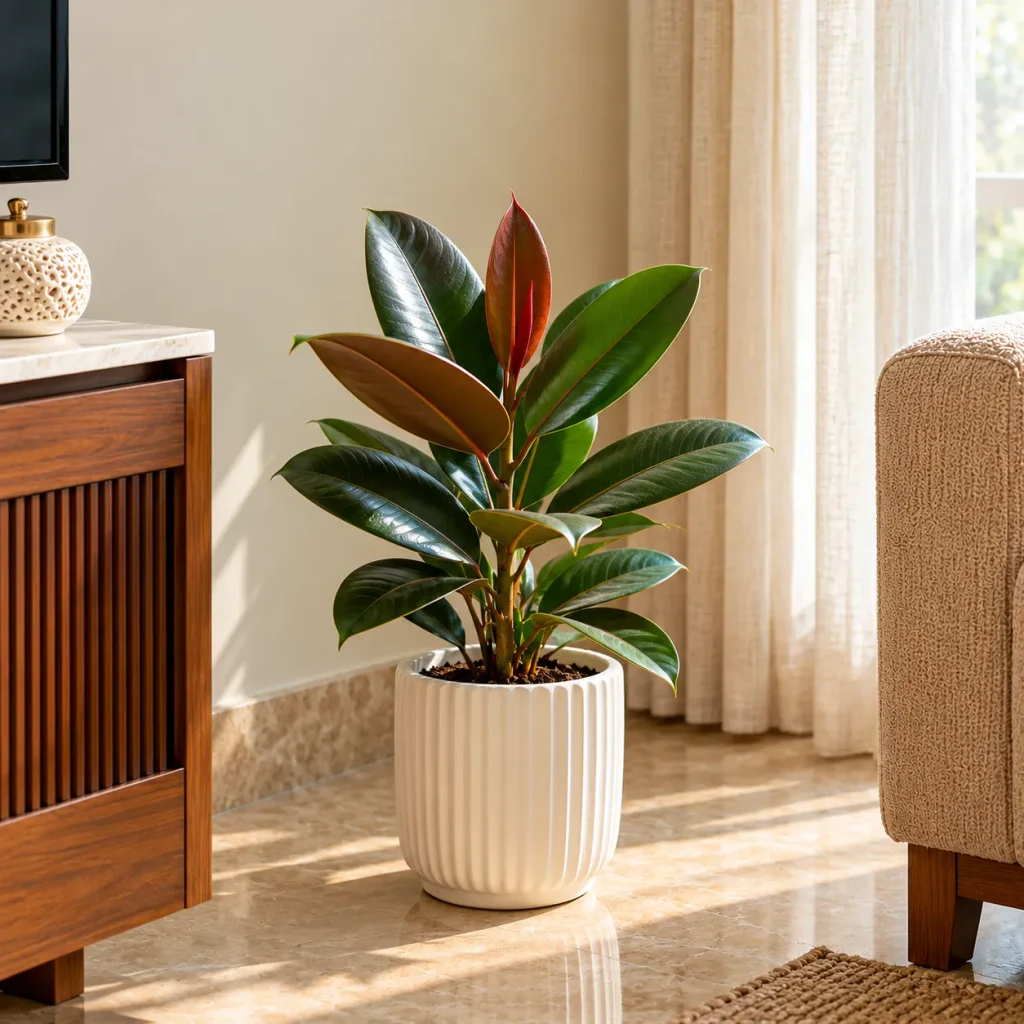
Rubber Plant | Ficus elastica
The rubber plant has thick, leathery leaves that may be deep green, burgundy or variegated, depending on the cultivar. New leaves emerge enclosed in a protective sheath before unfurling. Given suitable conditions, it can develop into a substantial indoor specimen rather than remaining a small tabletop plant.
Plants and Pets
Several popular houseplants can be harmful to cats and dogs if chewed or swallowed. Pothos (Epipremnum aureum), peace lily (Spathiphyllum), philodendron, anthurium, snake plant and ZZ plant are among those that warrant caution. Their effects vary: some cause mouth irritation, while others may lead to digestive upset.
The Spider plant (Chlorophytum comosum), Areca palm (Dypsis lutescens),Boston fern (Nephrolepis exaltata) are some of the plants as listed by the ASPCA as non-toxic to cats and dogs.
A Calmer, Greener Home
From a trailing vine to the upright leaves of a snake plant, each form brings a different character to an interior. Their appeal lies in this variety—and in the way living plants respond to light, moisture and the spaces they inhabit
A single plant on a windowsill can be as expressive as a collection of foliage in a sunlit room. Some draw the eye through their shape; others through variegation, delicate fronds or the repetition of green leaves.
The character of an indoor garden emerges from these differences—and from the way living plants respond to the rooms they inhabit. Their beauty is not separate from their biology: each leaf, stem and growing habit reflects the conditions in which the plant lives.