

Light, Materials and Interior Design
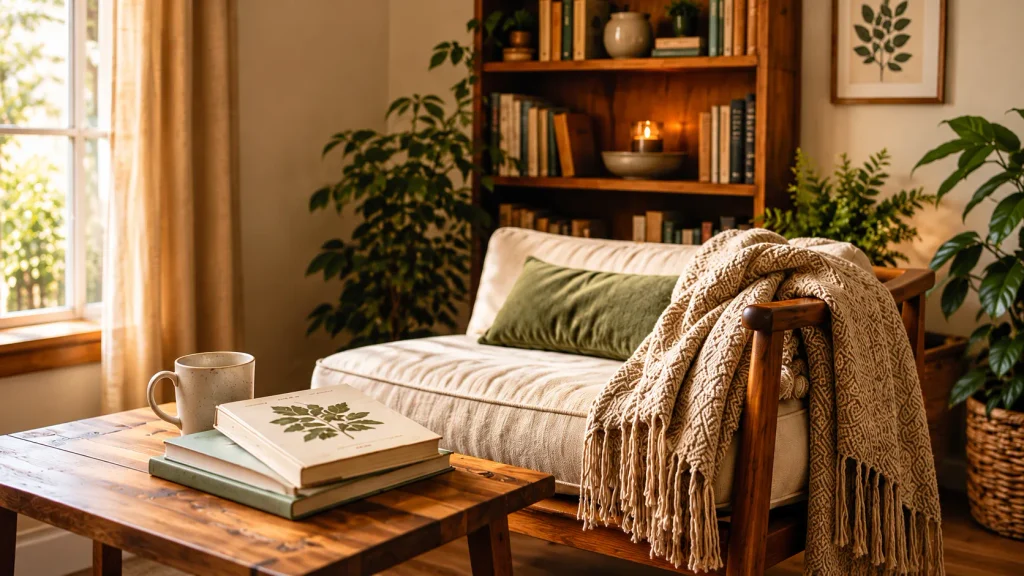
Morning arrives first at the windows. Sunlight moves across the floor, rests on a chair, then reaches a table or a stack of books. By evening, lamps replace daylight, shadows soften and familiar corners take on a different character. The room itself has barely changed. Yet the way it feels has shifted with the hours, the light and the activities that fill it.
A chair beside the window may become a favourite place for morning tea. Later, it becomes a reading corner. A table holds breakfast in the morning, flowers in the afternoon and books or unfinished work by evening. Gradually, ordinary objects become part of the room’s identity.
The character of everyday things
A woven basket beside the sofa, a bowl on the dining table or a collection of books on a shelf may have begun as separate choices. With use, these objects find their places. They become associated with particular activities, familiar routines and the people who share the space.
Some arrangements happen almost without thought. A favourite chair faces the same window. A lamp remains beside the place where someone reads. A wooden spoon rests in the same container beside the stove because that is where a hand expects to find it. What begins as a practical arrangement can gradually become the most recognisable part of a home.
A room through the seasons
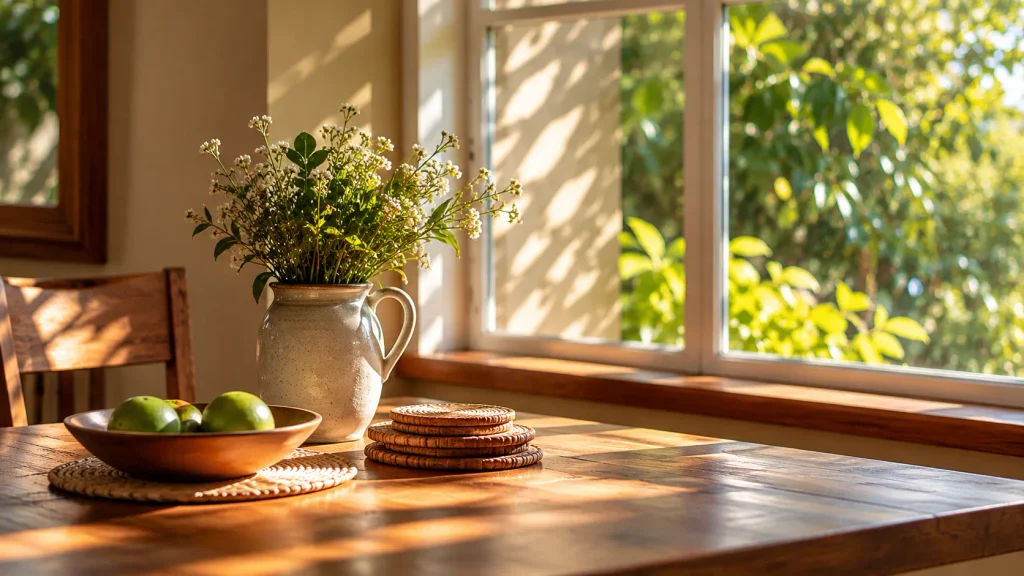
The seasons influence a room even when its furniture remains unchanged.
Summer may bring open windows, lighter fabrics and curtains moving in the breeze. During the monsoon, daylight becomes softer, and the view beyond the glass may disappear behind rain. In winter, warmer textiles, longer evenings and the glow of lamps can make the same room feel more intimate.
These changes need not involve a complete redesign. Sometimes, adjusting the curtains, bringing out a familiar throw or moving a few plants closer to the light is enough to make a space feel suited to the season.
A room can respond to changing weather and habits without losing its identity. Its familiar elements remain, while small details keep it feeling fresh.
Bringing the elements together
Materials that grow more interesting
A room’s character also comes from the materials within it. Wood develops a deeper sheen where hands have touched it repeatedly. Linen softens with washing. Leather acquires a patina through use, while woven materials may become more supple over time.
Such changes give familiar objects a sense of history. A new piece has the appeal of something freshly made; an older one carries the marks, softness and slight variations that come from years of everyday use.
This does not mean that every object must be old or that a home needs to be filled with possessions. A well-chosen piece can bring character to a room, whether it has been there for decades or arrived only recently. What matters is how it fits into the space and the life unfolding around it.
The memories a room holds
We rarely remember a room only by its furniture.
We remember the breakfast taken beside a particular window, the chair where someone always sat, or a book left open long after a meal was over. We remember conversations that stretched into the evening and the ordinary afternoons that seemed unremarkable at the time.
These details often become meaningful only later. A room acquires its character gradually, shaped by light, materials, objects and, above all, the moments that take place within it.
Proportion, texture, colour and light work together to shape an interior. The warmth of wood, the softness of linen, the placement of furniture and the scale of artwork each contribute to the overall composition. When these elements complement one another, they bring depth, balance and visual interest to a space. The result is an interior that feels cohesive without losing its individuality.
Good design lies in the harmony between the elements that make a space.