

Indian Millets: Flavours, uses & the changing Indian kitchen
Millets have been part of Indian kitchens for generations.
Their importance goes beyond nutrition : they connect food, farming and regional food traditions.
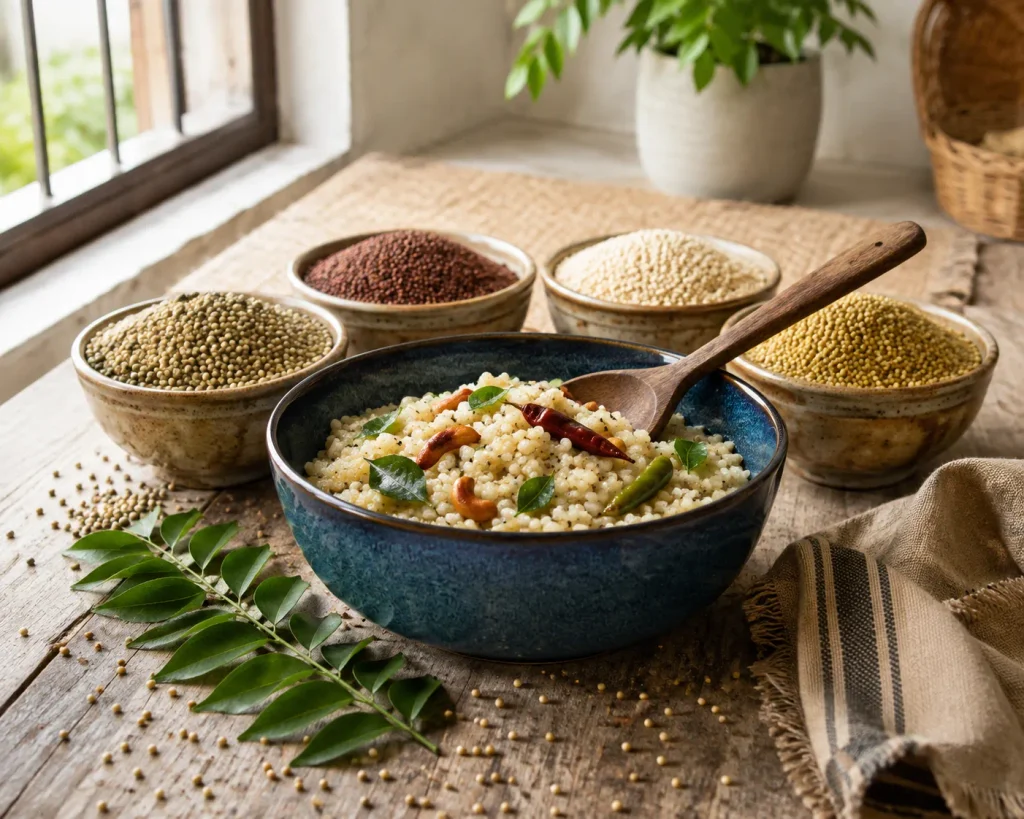
Long before millets appeared on café menus and supermarket shelves, they were being grown, cooked and eaten across many parts of India. They became flatbreads, porridges, steamed dishes and everyday meals, shaped by the grain, the region and the season.Jowar became bhakri in western and central India. Ragi became mudde, dosa and other preparations in the south. Bajra became part of traditional meals across Rajasthan, Gujarat, Haryana and beyond. Millets traditionally flourished in regions where rainfall was limited and growing conditions were demanding.
The Millet Family
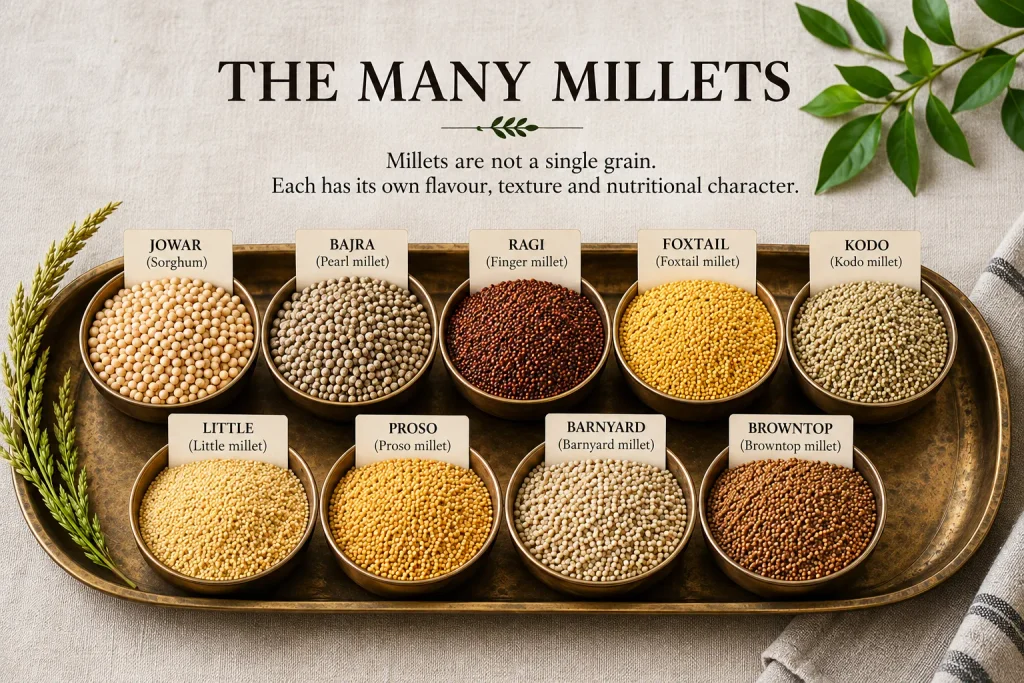
Millets are a family of grains, not a single grain. The major millets are jowar, bajra and ragi. The smaller millets include foxtail, little, kodo, barnyard, proso and browntop millets . Each has its own flavour, texture and nutritional profile. Jowar and bajra are valued for their fibre, minerals and plant protein; ragi is particularly rich in calcium, while the small millets bring their own nutritional strengths.
Major and small millets differ in how they are processed. Major millets such as jowar, bajra and ragi can generally be consumed as whole grains after cleaning and appropriate processing, while small millets such as foxtail, little, kodo and barnyard millet usually require dehulling before processing. The method of processing affects the grain’s texture, cooking quality and final use.
The Grain Remains. The Plate Changes
Millets can be cooked whole, ground into flour, made into flakes or puffed. They can become familiar dishes such as upma, dosa, idli, khichdi and bhakri, or can also be used in breads, biscuits, cakes and crisp snacks.
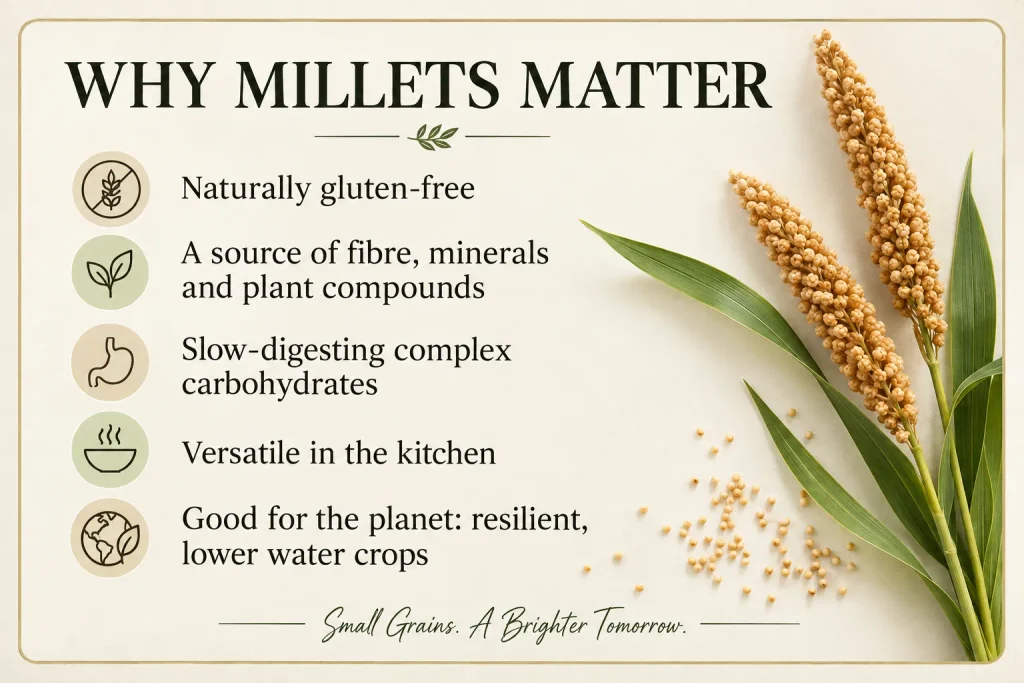
Millets are not a new food trend.They are old grains finding new relevance in modern kitchen – nutritionally diverse, naturally gluten free, climate resilient and remarkably versatile.
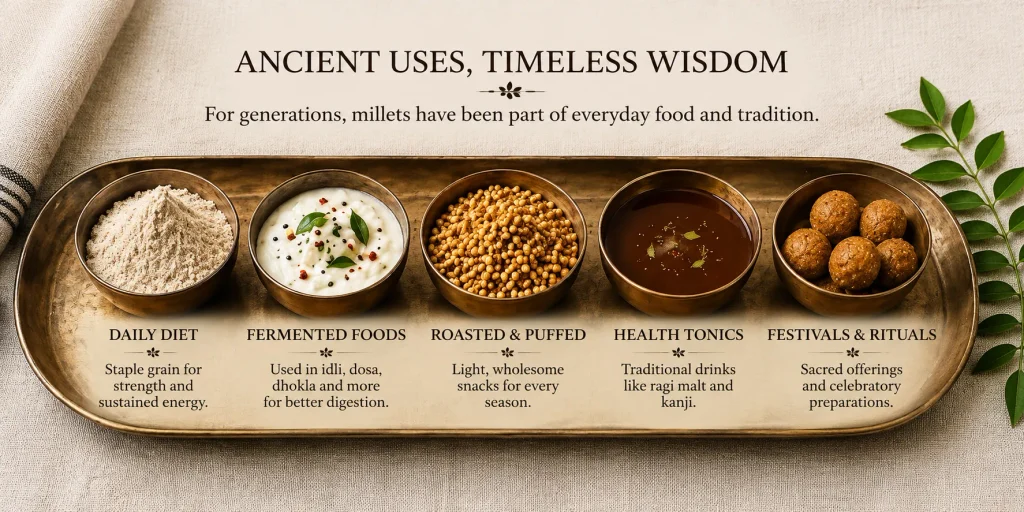
Millets adapt beautifully to our spices, our techniques and our traditions.
The way a millet is prepared can change its texture and flavour, but its place in Indian food traditions remains unmistakable.
From Grain to Plate
These grains have a natural place in everyday cooking, from familiar favourites to dishes still waiting to be discovered . Jowar poha brings one of them to the table . Vegetable Jowar Poha