A farmers market can take on a different character from one week to the next.”
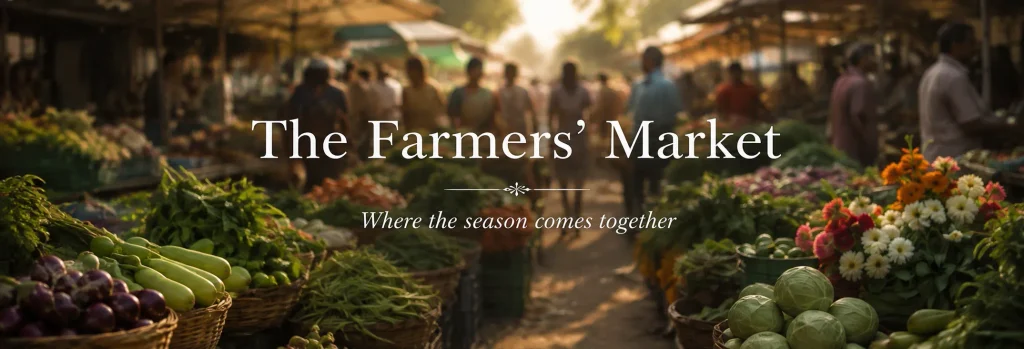
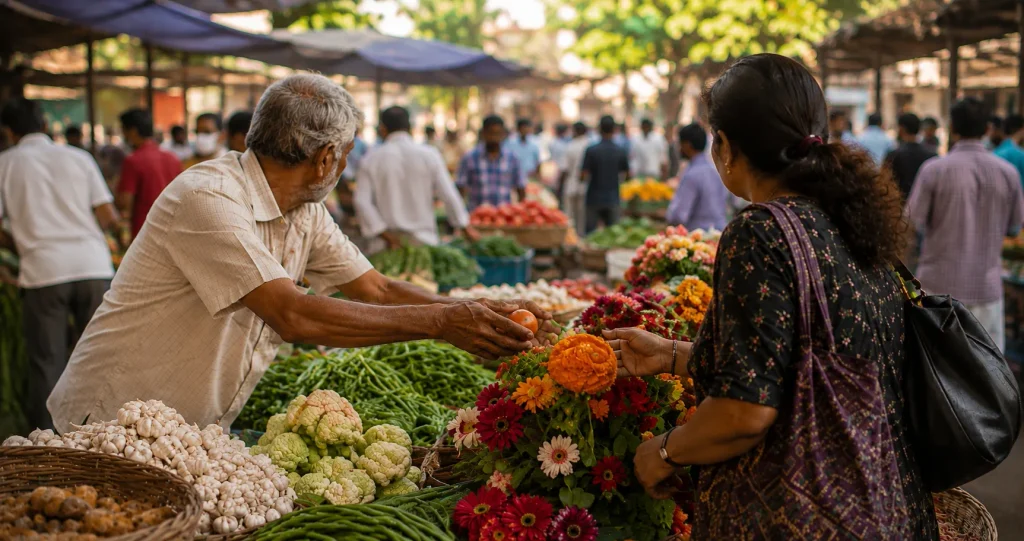
Farmers arrive with vegetables, fruit, flowers, herbs and other produce from nearby fields and gardens. Baskets and crates fill the stalls, colours change with the season, and the air carries a mixture of fresh produce, spices and food being cooked nearby.
A farmers’ market is never quite the same from one week to the next.

What the season brings
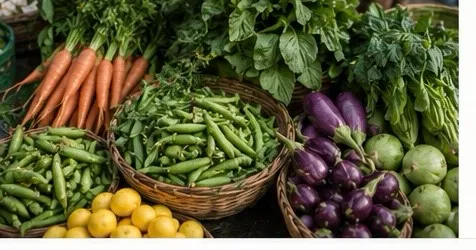
Some produce remains available for months, while other varieties appear only briefly.
Tender greens, fresh peas, seasonal fruits and local varieties each have their own time. Their arrival and disappearance give the market a changing character.
What grows nearby also reflects the landscape. Soil, climate, water and farming traditions influence the crops that farmers choose to grow, giving different markets their own particular mix of produce.
The variety is part of a living agricultural system, where different crops belong to different places and seasons.
More than produce
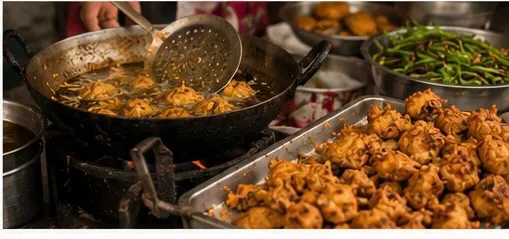
Alongside the vegetables and fruit, there may be flowers, grains, homemade products and stalls preparing food to eat there.
Hot pakodis, chaat, bhujiya, jalebi and other local snacks bring another layer to the market. Some are familiar across many parts of India; others are closely associated with a particular region.Their presence tells us something about the food culture around the market.
The market is therefore not simply a place where produce changes hands. It brings together what a place grows and what its people enjoy eating.
The people behind the stalls
A farmers’ market also makes the journey of food a little more visible.
The person arranging a basket of vegetables may have grown them, harvested them or brought them from a nearby farm. A flower seller may know exactly when a particular variety is at its best.
These small exchanges give the market its human character.
The produce is no longer anonymous. It has a place, a season and often a person behind it.
From market to menu
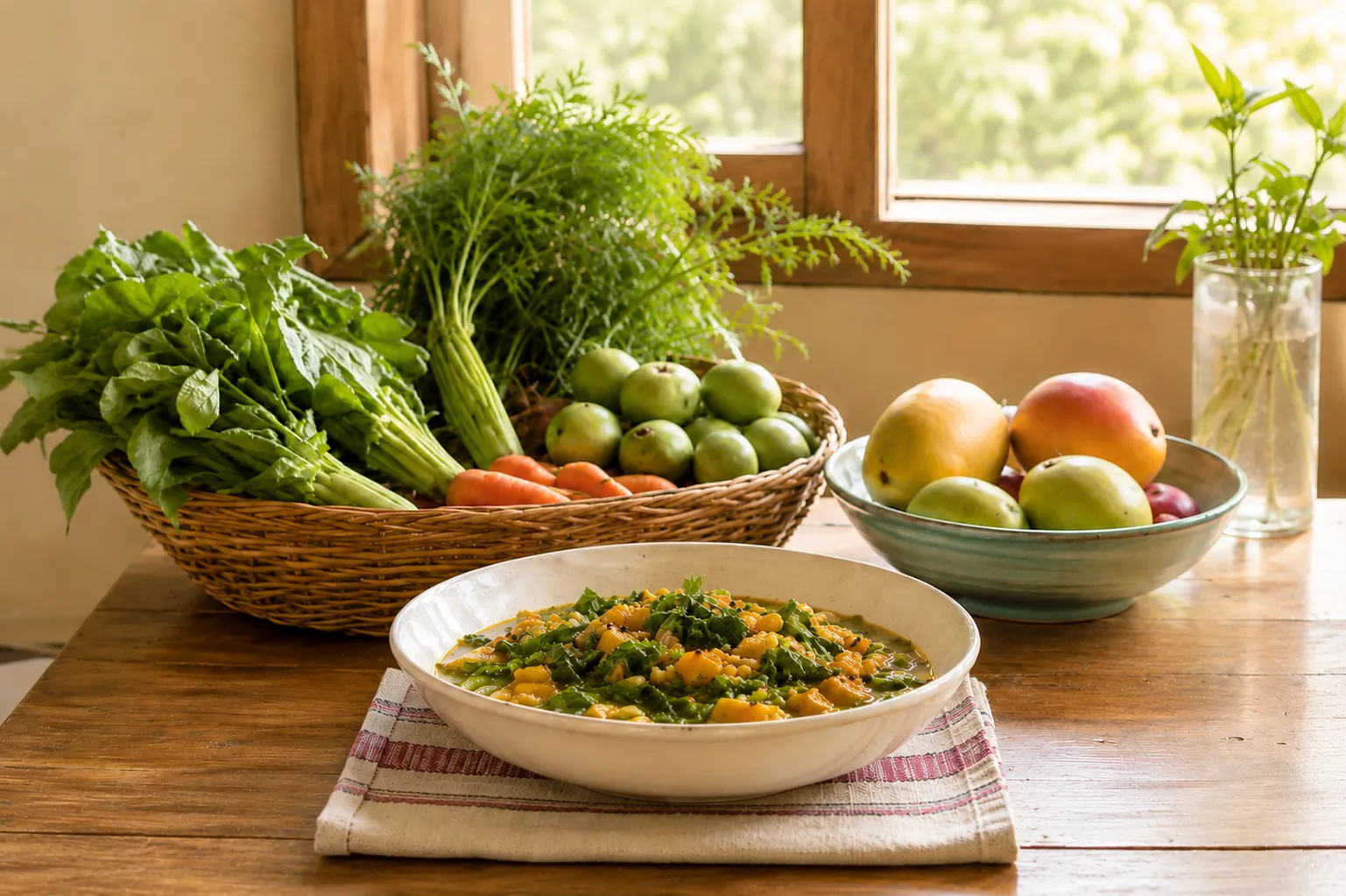
What comes home from the market can influence a meal in simple ways.A particularly good bunch of greens may become lunch. Fresh vegetables may find their way into a curry, while seasonal fruit may be eaten as it is or become part of a dessert.
Sometimes the meal is planned first. At other times, the produce suggests what comes next.That small element of spontaneity is part of the pleasure of seasonal food.A farmers’ market brings the field a little closer to the kitchen.By the time the stalls are packed away, the produce has begun another part of its journey.
And the following week, as the season moves on, the market will have something new to offer.